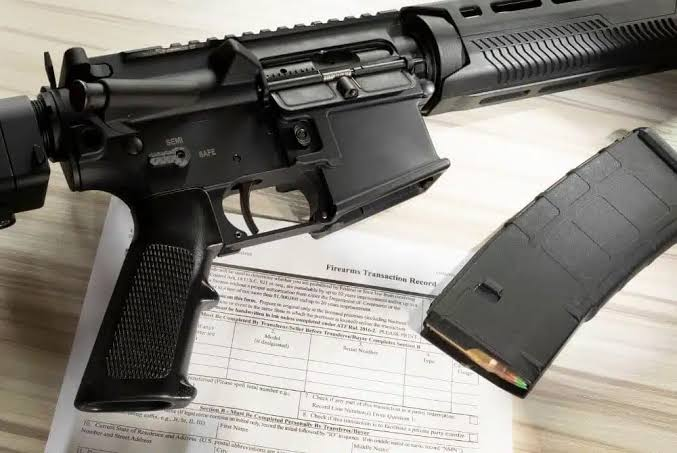
Firearm owners in the United States operate within a legal framework that is both detailed and, at times, inconsistently understood. Whether someone owns a rifle for competitive shooting, a handgun for personal protection, or a shotgun for hunting, the question of what can legally be changed, added, or modified on that firearm is one that carries real consequences. Getting it wrong is not simply a matter of voided warranties or mechanical issues. Depending on jurisdiction, unauthorized or uninformed modifications can result in federal violations, permanent loss of firearm rights, or criminal prosecution.
At the same time, there is a growing and legitimate interest in adjusting firearms to better fit individual users, improve ergonomics, enhance safety mechanisms, or meet the technical requirements of specific shooting disciplines. This interest is reasonable, and in most cases, it is fully supported by existing law — provided the modifications are made within the correct legal boundaries and with a clear understanding of what those boundaries are.
This guide addresses the legal dimensions of modifying personally owned firearms in the United States. It is written for gun owners, competitive shooters, gunsmiths, and retailers who want a grounded, factual reference for how these processes work under federal and state law.
What Firearm Customization Actually Involves
At its core, firearm customization refers to any intentional change made to a factory-produced firearm beyond its original manufactured configuration. This includes changes to the trigger mechanism, barrel assembly, stock or grip, sighting systems, furniture, finishes, and internal components. The range of modifications available today is significant, covering everything from cosmetic surface treatments to functional changes that alter how a firearm operates mechanically.
For those researching professional services in this area, a resource covering firearm customization can help clarify what services are available and what falls under professional versus DIY work. Understanding the difference matters, because not all modifications are treated equally under federal or state law, and the method by which a modification is performed — whether by the owner or a licensed gunsmith — can affect legal standing.
There is a practical distinction between cosmetic and functional modifications. Cosmetic changes — such as applying a cerakote finish, changing grip panels, or adding a rail-mounted accessory — generally present fewer legal complications. Functional modifications — such as altering trigger pull weight, replacing a barrel, or changing the rate of fire in any way — require a more thorough understanding of applicable regulations before work begins.
The Role of Licensed Gunsmiths in Legal Modifications
Licensed gunsmiths hold a Federal Firearms License (FFL) and are regulated by the Bureau of Alcohol, Tobacco, Firearms and Explosives (ATF). When a firearm owner takes a weapon to a licensed gunsmith for modification, that transaction involves specific legal obligations, including proper logging of the firearm, compliance with state transfer laws if the firearm leaves the owner’s possession for a defined period, and accurate record-keeping of the work performed.
Working with a licensed professional is not just about competence, though that matters significantly. It is also about legal accountability. A gunsmith who performs regulated work without proper licensing, or who performs work that falls outside the legal scope of permissible modifications, exposes both themselves and the firearm owner to federal liability. Owners who perform certain modifications on their own firearms without following proper procedures face the same exposure.
Federal Law and the Boundaries of Legal Modification
Federal law, primarily governed by the National Firearms Act (NFA) of 1934 and the Gun Control Act (GCA) of 1968, establishes the baseline rules for what modifications are permissible, which require federal registration, and which are outright prohibited. These laws have been amended and interpreted through subsequent legislation and ATF rulings, and understanding them accurately requires looking at current regulatory guidance rather than secondhand summaries.
The ATF maintains publicly accessible guidance on regulated items and modification categories, and the Bureau of Alcohol, Tobacco, Firearms and Explosives publishes updated information on firearm classifications and owner responsibilities that applies directly to customization decisions.
NFA-Regulated Modifications
Certain modifications bring a standard, commercially sold firearm into the category of an NFA item. The most commonly encountered examples involve changes that affect barrel length, overall firearm length, or the addition of suppressor components. When a rifle’s barrel is cut below the federally defined minimum length without following the correct NFA registration process, that rifle becomes an unregistered short-barreled rifle (SBR) — a federal felony regardless of intent.
The registration process for NFA items involves submitting paperwork through an FFL dealer, payment of the federal tax stamp, and approval from the ATF before the modification is made or the item is transferred. This process takes time and requires patience, but it is the only legal pathway for modifications that change a firearm’s classification. Completing this process correctly is not difficult, but bypassing it — even informally or temporarily — is not a legal gray area.
Modifications That Do Not Require Federal Registration
The majority of modifications that firearm owners pursue do not require NFA paperwork or federal registration. Replacing a factory trigger with an aftermarket unit, changing a stock, adding an optic, refinishing the exterior, or modifying grip geometry are examples of modifications that are generally permissible under federal law when performed on a legally owned firearm.
That said, “generally permissible under federal law” does not mean universally legal. Federal law sets a floor, not a ceiling. State and local laws may further restrict specific modifications, require registration of modified components, or prohibit certain features entirely regardless of federal permissibility.
State-Level Regulations and Their Practical Impact
State laws governing firearm modifications vary considerably across the country, and owners who travel across state lines with modified firearms must account for the legal requirements of each state they pass through. What is legal in one state may be a criminal offense in another, even if the modification was made lawfully in the owner’s home state and has federal approval.
States with more restrictive firearms laws often regulate specific features on semi-automatic rifles and handguns. These feature-based restrictions frequently affect magazine capacity, pistol grips, folding or telescoping stocks, and certain barrel attachments. In these jurisdictions, adding a feature that is unrestricted federally can still place the owner in violation of state law.
Navigating Multi-Jurisdiction Compliance
The challenge of multi-jurisdiction compliance is particularly relevant for competitive shooters who attend events in different states, and for professionals such as armed security contractors or law enforcement officers who carry modified duty weapons across state lines. In these cases, the legal configuration of a firearm must be evaluated against the rules of every jurisdiction involved, not just the home state.
This is not a theoretical concern. It is a practical operational issue that professional gunsmiths and firearms attorneys address regularly. The prudent approach is to research each state’s current statutes before traveling with a modified firearm, and to keep documentation of any legally completed NFA registrations or manufacturer compliance records in accessible form when carrying or transporting the weapon.
Documentation, Records, and Owner Responsibility
One of the least discussed but most important aspects of firearm customization is documentation. When modifications are made to a firearm — particularly those involving serialized components, NFA registration, or changes to the firearm’s original configuration — maintaining accurate records protects the owner in the event of a legal inquiry, a theft report, or a transfer of the firearm to another individual.
For NFA-regulated items, the approved Form 4 or Form 1 must accompany the firearm at all times when it is in the possession of the registered owner or their designated trust or entity. Losing this documentation does not invalidate the registration, but it creates complications that are avoidable with proper record management.
Transfers and Modifications After Purchase
When a modified firearm is sold or transferred to another person, the legal status of any modifications transfers with the firearm. A new owner who acquires a firearm with an illegal modification inherits a legal problem, even if they were unaware of it at the time of purchase. Sellers and buyers both benefit from verifying the legal status of any modifications before completing a transfer, and involving a licensed FFL dealer in private sales is one way to ensure proper documentation throughout the process.
Custom work that has been done to a firearm can also affect its resale value significantly, for better or worse. Professionally completed modifications from a qualified gunsmith, with documented work orders, are generally better received by buyers than undocumented or self-performed alterations — particularly for any modifications that touch regulated components.
Closing Considerations for Responsible Firearm Modification
Legal firearm customization in the United States is a well-defined area when approached with accurate information. The rules that govern what can be changed, how, and by whom are extensive but navigable. The most common source of legal risk for firearm owners is not intentional wrongdoing — it is incomplete knowledge of the regulations that apply to a specific modification in a specific jurisdiction.
The practical guidance for any owner considering modifications is consistent: identify the legal classification of the intended change before beginning any work, confirm compliance with both federal and state law, work with licensed professionals when modifications touch regulated components, and maintain documentation of any work performed. These steps do not complicate the process — they protect the owner and ensure that the final product is both functional and legally sound.
Firearm ownership carries inherent responsibility. Customization extends that responsibility to include an understanding of how changes affect legal standing, not just mechanical performance. Owners who take the time to learn the applicable law before modifying their firearms are in a significantly stronger position — legally, practically, and professionally — than those who make changes first and research later.