Choosing the correct boiler output is one of the most important steps when upgrading a domestic heating system. A boiler is not simply selected by brand or price; it must be matched carefully to the property’s size, hot water demand, insulation quality and the way the household uses heating throughout the year. Many homeowners ask What Size Boiler Does Your Home Need? because the answer can affect comfort, energy bills, hot water performance and the lifespan of the heating system. A boiler that is too small may struggle during colder months, while an oversized boiler can waste energy and place unnecessary stress on internal components. Correct boiler sizing helps ensure that the property receives consistent heat, reliable hot water and efficient operation without excessive fuel use. This is especially important in homes where older systems have been replaced, extended or modified over time.
Why Boiler Sizing Is So Important
A common mistake is assuming that a larger boiler will always perform better. In reality, bigger is not always better. A boiler must be powerful enough to meet demand, but not so powerful that it constantly switches on and off unnecessarily.
If a boiler is undersized, it may fail to heat the home properly during winter. Radiators may take too long to warm up, hot water may fluctuate, and the system may run continuously while trying to reach the desired temperature.
If a boiler is oversized, it may reach temperature too quickly and then shut down before restarting again shortly afterwards. This is known as short cycling. Short cycling wastes energy, increases wear on components and can reduce the long-term reliability of the appliance.
Correct boiler sizing supports:
- Better heating comfort
- More stable hot water
- Improved energy efficiency
- Lower unnecessary fuel usage
- Reduced strain on the appliance
- Fewer performance issues
- Longer system lifespan
A properly sized boiler should work smoothly, respond efficiently and provide enough output for the home without being excessive.
Understanding Boiler Output in kW
Boiler size is measured in kilowatts, usually shown as kW. This refers to the amount of heat energy the boiler can produce. The higher the kW rating, the greater the heating and hot water output.
However, boiler output should not be selected based only on the number of bedrooms. While property size is important, it is only one part of the calculation. A heating engineer will usually consider:
- Number of radiators
- Number of bathrooms
- Number of occupants
- Hot water usage
- Insulation quality
- Window condition
- Property layout
- Water pressure
- Existing pipework
- Future extension plans
Two homes with the same number of bedrooms may need different boilers if one has better insulation, fewer bathrooms or lower hot water usage.
Boiler Type Affects Boiler Size
Before choosing the correct output, it is important to understand which boiler type is most suitable for the property. The three main domestic boiler types used in UK homes are combi boilers, system boilers and conventional boilers. Each type works differently and has different sizing considerations.
Combi Boilers
Combi boilers provide heating and hot water directly from one compact unit. They do not usually need a separate hot water cylinder or cold water storage tank. This makes them popular in flats, terraced homes and medium-sized properties where space is limited.
Combi boilers are often sized partly according to hot water demand because they heat water on demand. A higher kW combi boiler can usually provide a stronger hot water flow rate, which is useful for homes with higher shower or tap usage. However, combi boilers may not be ideal for larger homes where multiple bathrooms are used at the same time.
System Boilers
System boilers work with a separate hot water cylinder. They are often better suited to properties with higher hot water demand, especially where more than one shower or tap may be used at once. Because hot water is stored in a cylinder, system boilers can provide better performance for larger households. The boiler output must be correctly matched to the radiator system and the size of the hot water cylinder.
Conventional Boilers
Conventional boilers, also known as regular or heat-only boilers, are commonly found in older and larger properties. They usually work with a hot water cylinder and cold water storage tanks. These systems can be suitable for homes with traditional heating layouts, older pipework or multiple bathrooms. Sizing a conventional boiler requires careful assessment because the wider system may include older radiators, tanks, pipework and controls.
Boiler Size for Small Homes
Small homes usually require lower boiler output because they have fewer rooms, fewer radiators and lower hot water demand. This category may include:
- One-bedroom flats
- Small apartments
- Compact terraced homes
- Properties with one bathroom
- Homes with limited radiator circuits
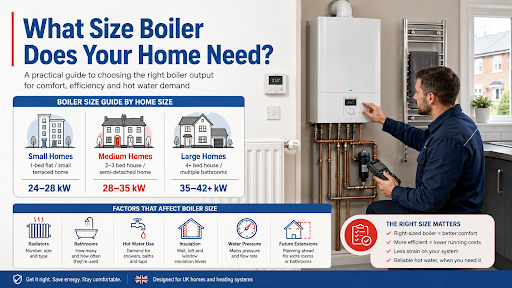
For many small properties, a combi boiler between 24kW and 28kW may be suitable. This can provide enough output for heating and everyday hot water use without being unnecessarily powerful.
However, even in smaller homes, water usage matters. A small flat with frequent shower use may need a different setup from a similar property occupied by one person with lower demand. Compact boilers are often preferred in smaller properties because they can fit inside kitchen cupboards, utility spaces or storage areas.
Boiler Size for Medium-Sized Homes
Medium homes usually need a higher output than flats or small houses because they contain more radiators and often have greater hot water demand. This category may include:
- Two to three-bedroom houses
- Semi-detached homes
- Larger terraced homes
- Properties with one or two bathrooms
- Family homes with regular hot water usage
A boiler between 28kW and 35kW may be suitable for many medium-sized homes, depending on the household’s needs. If the home has two bathrooms or several occupants, hot water demand becomes more important. In this case, a larger combi boiler or a system boiler with a hot water cylinder may be more practical. The aim is to provide enough heating and hot water without forcing the boiler to operate beyond its ideal working range.
Boiler Size for Large Homes
Larger homes require a more detailed assessment because heating demand can vary significantly depending on layout, insulation and usage. This category may include:
- Four-bedroom homes
- Detached properties
- Larger semi-detached houses
- Homes with multiple bathrooms
- Properties with extensive radiator systems
- Homes with extensions or loft conversions
A large home may require a boiler output of 35kW to 42kW or more, depending on hot water and heating demand. In many larger properties, a system boiler may be more suitable than a combi boiler because stored hot water can support multiple bathrooms more effectively. If several showers, taps or baths are used at the same time, a correctly sized cylinder can make a major difference to comfort and performance.
Hot Water Demand Matters
Hot water usage is one of the biggest factors in boiler selection, especially when choosing a combi boiler. A property with one bathroom and two occupants will usually need less hot water capacity than a family home with two bathrooms, a bath, multiple showers and frequent appliance use.
High hot water demand may come from:
- Multiple bathrooms
- Power showers
- Large baths
- Busy family routines
- Frequent laundry
- High kitchen usage
- Several occupants using water at similar times
If hot water demand is high, choosing the wrong boiler can result in temperature drops, weak flow rates or poor performance when more than one outlet is used.
The Role of Insulation
Insulation has a major impact on heating requirements. A well-insulated property retains heat more effectively, meaning the boiler does not need to work as hard to maintain comfortable temperatures. Poorly insulated homes lose heat faster through walls, roofs, floors, doors and windows. This can increase the heating load and may require a more powerful system or wider efficiency improvements.
Before installing a new boiler, homeowners should consider whether the property would benefit from:
- Loft insulation
- Wall insulation
- Draught proofing
- Double or triple glazing
- Improved radiator controls
- Better heating zoning
Improving insulation can reduce the required heating demand and help the new boiler operate more efficiently.
Radiators and Pipework
The boiler is only one part of the heating system. Radiators, pipework, valves and controls all affect overall performance. Old or undersized radiators may not distribute heat effectively, even if the boiler itself is powerful enough. Similarly, older pipework may restrict flow or reduce efficiency.
A heating assessment should check whether the existing radiators are suitable for the new boiler and whether any upgrades are required. In some homes, improving radiator performance may be just as important as choosing the right boiler output.
Water Pressure and Flow Rate
For combi boilers, mains water pressure and flow rate are extremely important. A high-output combi boiler cannot perform properly if the incoming water supply is too weak. Before recommending a combi boiler, engineers should check the property’s incoming water pressure and flow rate. If the supply is too limited, a system boiler with a hot water cylinder may deliver better results. This is particularly important in larger homes or properties where several outlets may be used at the same time.
Future Property Changes
Boiler sizing should also consider future plans. If a homeowner is planning an extension, loft conversion, additional bathroom or underfloor heating, the current heating demand may increase. Choosing a boiler only for the property’s current layout may create problems later if the home is expanded.
Future changes that may affect boiler size include:
- New bathrooms
- Additional bedrooms
- Kitchen extensions
- Loft conversions
- Underfloor heating
- Larger radiators
- Increased occupancy
A professional assessment can help avoid installing a boiler that becomes unsuitable after future improvements.
Signs Your Boiler May Be the Wrong Size
Many homeowners only realise their boiler is incorrectly sized after experiencing ongoing heating problems. Common warning signs include:
- Radiators taking too long to heat
- Rooms heating unevenly
- Hot water running cold
- Frequent boiler cycling
- High energy bills
- Regular breakdowns
- Noisy operation
- Poor winter performance
- Difficulty heating larger rooms
These symptoms do not always mean the boiler size is wrong, but they do suggest that the system should be inspected. Other causes may include sludge, faulty controls, poor circulation, ageing radiators or incorrect system balancing.
Why Professional Calculation Matters
Boiler sizing should not be based on guesswork. A professional heating engineer will assess the property properly before recommending a suitable appliance. This may involve checking:
- Heat loss
- Radiator numbers
- Property size
- Insulation levels
- Water usage
- Boiler location
- Existing pipework
- Gas supply
- Flue route
- Control setup
Accurate sizing helps prevent avoidable problems and ensures the new boiler is suitable for real household demand. For homeowners looking for Expert Boiler Installation, Repairs & Servicing in Fulham , professional advice can help ensure the selected boiler delivers efficient heating, reliable hot water and long-term value.
Final Thoughts
Choosing the right boiler size is essential for comfort, efficiency and long-term reliability. A boiler that is too small may struggle to meet demand, while an oversized boiler can waste energy and increase wear.
The correct output depends on property size, hot water demand, number of bathrooms, radiator capacity, insulation quality and future plans. Small homes may only need a compact combi boiler, while larger properties may require a higher-output system boiler with stored hot water. Medium homes often sit somewhere between these two options and require careful assessment.
The best result comes from matching the boiler to the property rather than choosing based on size alone. With the right calculation and professional installation, homeowners can enjoy reliable heating, better efficiency and a system that performs properly for years.What Size Boiler Does Your Home Need?