Spreader Bar: A Powerful Guide to Safe Lifting, Load Balance, and Practical Uses
Understanding how a spreader bar works, where it is used, and why it matters for safety, stability, and controlled weight distribution

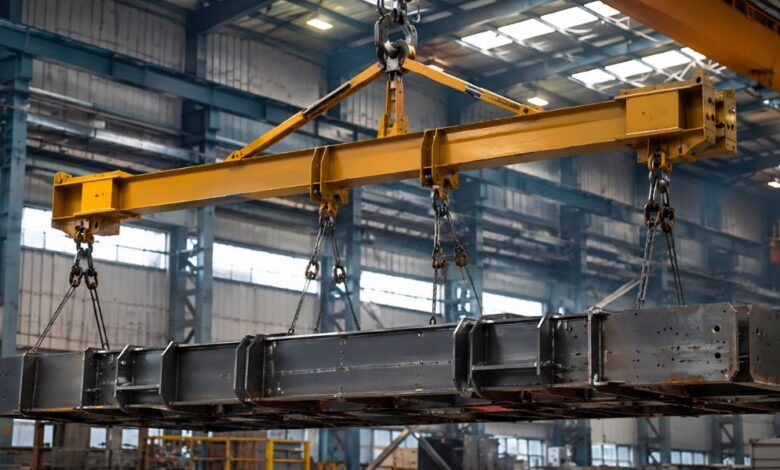
A spreader bar is a horizontal rigging element designed to distribute load, force, or tension over multiple attachment points. It is widely recognised as an essential device in heavy lifting, industrial rigging, crane operations, and construction projects. Its purpose is straightforward yet critical: it maintains balanced, stable, and safer lifting. Rather than allowing force to concentrate at a single location, a spreader bar disperses pressure across a broader surface, minimising stress on the load, lifting apparatus, and connection points.
In many industries, lifting heavy or irregularly shaped objects without the right support can be risky. Loads may tilt, swing, bend, or become damaged if they are not handled correctly. This is where a lifting spreader bar becomes valuable. It creates proper separation between lifting slings and helps maintain the correct lifting angle. Doing this improves control and reduces the risk of accidents.
Although the term is mainly connected with rigging and lifting, spreader bars are also used in other areas such as sailing, medical equipment, rescue systems, and specialised personal activities. In every case, the main idea remains the same: a spreader bar helps distribute force more evenly and improves stability.
What Is a Spreader Bar?
A spreader bar is a horizontal beam connecting to lifting slings, hooks, or straps, spacing attachment points and reducing compression forces.
In industrial lifting, a spreader bar is often used with cranes, hoists, and other lifting machines. It may be made from steel, aluminium, or other high-strength materials, depending on the weight capacity and working environment. Some spreader bars are fixed in length, while others are adjustable to suit different load sizes.
The design of a spreader bar may look simple, but its role is highly technical. It must be strong enough to handle the load, properly rated for its weight capacity, and used in accordance with safe lifting practices. A poorly selected or incorrectly used spreader bar can create serious hazards.
How a Spreader Bar Works
A spreader bar creates a wider lifting arrangement, keeping slings apart and reducing stress on the load and rigging.
This wider angle keeps the load level and protects delicate objects. Spreader bars help maintain shape and balance for various items.
The key function of a rigging spreader bar is controlled weight distribution. It does not simply lift the object; it supports the lifting process by balancing and predicting the force. This is why trained riggers often rely on spreader bars when handling long, wide, fragile, or uneven loads.
Main Uses of a Spreader Bar
Spreader Bar in Heavy Lifting
The most common use of a spreader bar is in heavy lifting and crane operations. Construction companies, warehouses, factories, shipping yards, and engineering sites use spreader bars to safely lift heavy loads. These loads may include steel structures, concrete panels, industrial machines, boats, containers, and large equipment parts.
Heavy-duty spreader bars prevent twisting or tipping and provide multiple lifting points, making them useful for uneven or large objects.
Spreader Bar in Rigging
Riggers use spreader bars to manage sling angles, reduce load pressure, and improve control.
Rigging safety depends on correct planning. The load weight, centre of gravity, sling type, lifting angle, attachment points, and spreader bar rating must all be considered. When these factors are handled properly, the spreader bar becomes a powerful safety tool.
Spreader Bar in Medical Care
A spreader bar can also be used in medical care, especially with patient lifting systems. In this setting, it may be part of a hoist or transfer device used to safely move patients. The bar helps support slings and distribute body weight more evenly, making transfers more comfortable and controlled.
Medical spreader bars are distinct from industrial models. They are crafted for patient comfort, hygiene, and secure handling rather than machinery. Nonetheless, the goal remains consistent: ensuring balance and distributing weight effectively.
Spreader Bar in Sailing
In sailing, a spreader bar, or spreader, is part of the rigging system on a mast. It helps support the mast by holding the shrouds away from it at the correct angle. This improves strength and stability, especially when the boat is under wind pressure.
Sailing spreaders apply the same principle: manage tension and improve support.
Benefits of Using a Spreader Bar
Better Load Balance
One of the biggest advantages of a spreader bar is improved balance. When a load is lifted from more than one point, it is less likely to tilt or rotate unexpectedly. This is especially important when moving long, heavy, or fragile objects.
Reduced Load Damage
A spreader bar keeps slings vertical and reduces pressure, protecting items from damage.
Improved Workplace Safety
A spreader bar improves safety by reducing uncontrolled movement and the risk of accidents.
Better Sling Angles
A spreader bar maintains optimal sling angles, improving stability and efficiency during lifting.
Types of Spreader Bars
Fixed Spreader Bar
Fixed spreader bars have a set length for lifting jobs where the width is consistent.
Adjustable Spreader Bar
An adjustable spreader bar can be extended or shortened to various lengths. This is advantageous for businesses handling different load sizes. It offers adaptability and minimises the need for multiple fixed bars.
Modular Spreader Bar
Modular spreader bars connect sections for different lengths, adapting to various lifting tasks.
Custom Spreader Bar
Custom spreader bars are made for particular loads or environments and must be engineered and tested.
Important Safety Considerations
Check Load Capacity
Never exceed a spreader bar’s rated capacity to avoid equipment failure and accidents.
Inspect Before Use
Inspect spreader bars for damage before each lift. If in doubt, don’t use it.
Use Correct Rigging Equipment
Use only suitable slings, hooks, shackles, and connections. All parts must be strong and secure for the load.
Understand the Load
The weight, shape, and centre of gravity of the load should be understood before lifting. If the load is heavier on one side, the rigging setup must account for that imbalance.
Why Training Matters
A spreader bar should be used by trained people who understand rigging principles. Even strong equipment can become dangerous when used incorrectly. Proper training helps workers choose the right equipment, inspect it, and complete the lift safely.
Spreader Bar vs Lifting Beam
A spreader bar mainly handles compression, with slings above and below. A lifting beam manages bending forces, connecting from the top.
Choose based on load, height, angle, and conditions. Use proper engineering and planning.
Conclusion
A spreader bar is a practical and powerful tool for improving lifting safety, balance, and weight distribution. In industrial rigging, it helps cranes and hoists lift heavy or awkward loads with greater control. In medical care, sailing, and other specialised fields, it also supports stability and safer force distribution.
The most important value of a spreader bar is not just strength. Its real value is control. Spreading the load across multiple attachment points reduces stress on the object being lifted, protects the object, and helps create a safer working environment. Whether used on a construction site, in a factory, on a boat, or in a care setting, a spreader bar plays a meaningful role in safety and performance.
(FAQs)
What is a spreader bar used for?
A spreader bar distributes weight or tension across multiple attachment points. In lifting and rigging, it helps keep loads balanced, reduces sling pressure, and improves safety during crane or hoist operations.
Is a spreader bar the same as a lifting beam?
No, a spreader bar and a lifting beam are different. A spreader bar usually works with compression forces and sling arrangements, while a lifting beam often carries bending forces. Both are used for lifting, but the correct choice depends on the job.
Why is a spreader bar important in rigging?
A spreader bar is important because it improves load stability, creates safer sling angles, and reduces stress on the load and lifting points. It helps make heavy lifting more controlled and safer.
Can a spreader bar be adjustable?
Yes, many spreader bars are adjustable. Adjustable spreader bars are useful for lifting loads of varying lengths and sizes, making them practical for industries that handle a range of lifting tasks.
What should be checked before using a spreader bar?
Before using a spreader bar, workers should check its load rating, physical condition, attachment points, labels, and compatibility with slings and hooks. Any damaged or uncertain equipment should not be used.