ARK Augmented Reality: Redefining Intelligent Digital Interaction
How Knowledge-Driven Augmented Reality Is Shaping the Future of Human–Computer Experience

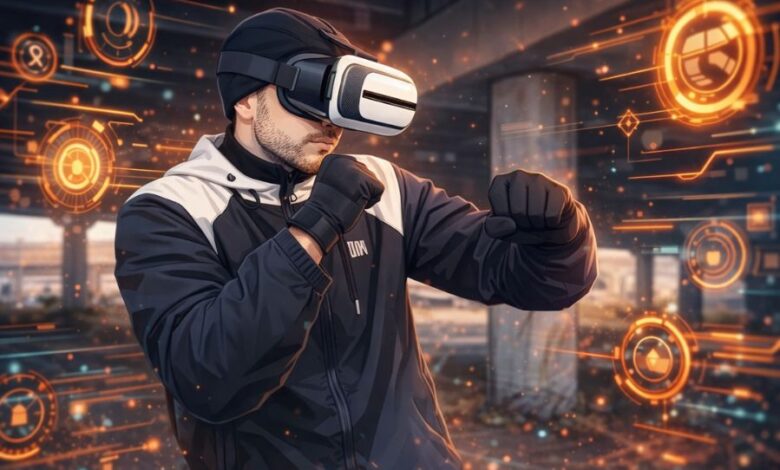
ARK Augmented Reality represents a powerful evolution of augmented reality technology, moving far beyond basic visual overlays into the realm of intelligent, context-aware digital interaction. At its core, ARK Augmented Reality is rooted in the concept of ArK (Augmented Reality with Knowledge). This framework combines computer vision, artificial intelligence, and external knowledge graphs to enable digital content to understand and respond to the physical world truly truly.
Traditional augmented reality systems focus on placing virtual objects into real environments without deeper comprehension. ARK Augmented Reality changes this paradigm by enabling semantic awareness. Digital elements are not only visible but also contextually meaningful, allowing them to behave intelligently based on location, object relationships, and user intent. This shift marks a critical milestone in the development of immersive and practical AR systems.
The Core Philosophy Behind ARK Augmented Reality
ARK Augmented Reality is built on the principle that reality is more than geometry. By integrating structured knowledge from text, images, and databases, the system allows virtual objects to reason about their surroundings. A digital object can understand what it is interacting with, why it exists in a specific location, and how it should respond to changes in the environment.
This knowledge-driven approach enhances realism and usefulness. For example, instead of simply displaying a 3D heart model, ARK Augmented Reality can recognize anatomical context, explain functions, and adapt explanations based on user interaction. This fusion of perception and reasoning defines the intelligence layer that distinguishes ARK from conventional augmented reality platforms.
Key Features of ARK Augmented Reality
Knowledge Integration and Semantic Awareness
The defining feature of ARK Augmented Reality is its ability to integrate external knowledge systems. Through artificial intelligence and reasoning models, digital elements gain awareness of their purpose and surroundings. This enables smarter interactions, such as understanding object categories, spatial relationships, and contextual relevance, making AR experiences more meaningful and informative.
Advanced Real-Time Tracking
ARK Augmented Reality relies on sophisticated computer vision algorithms to deliver precise object recognition and tracking. The system can identify surfaces, objects, and environments in real time, ensuring that virtual content remains stable and accurately aligned. This level of monitoring is essential for immersive experiences, especially in dynamic or complex physical spaces.
High-Fidelity Rendering Across Devices
Visual quality plays a major role in user immersion. ARK Augmented Reality emphasizes high-fidelity rendering, ensuring realistic lighting, shadows, and textures. Whether accessed through smartphones, tablets, or AR headsets, the experience remains smooth and visually consistent, supporting wide adoption across consumer and enterprise devices.
Cloud-Based Processing for Scalability
To maintain performance without overwhelming local hardware, ARK Augmented Reality leverages cloud computing. Complex data processing, knowledge reasoning, and mapping tasks are handled remotely, allowing even low-spec devices to access advanced AR functionality. This architecture ensures scalability, reliability, and consistent quality across diverse user environments.
Primary Applications of ARK Augmented Reality
Education and Learning Transformation
In education, ARK Augmented Reality turns passive learning into active exploration. Students can interact with 3D simulations that respond intelligently to their actions. Historical environments become explorable spaces, scientific concepts become interactive models, and abstract theories take tangible form. The integration of contextual knowledge ensures that learners receive accurate, adaptive explanations tailored to their level of understanding.
Retail and E-Commerce Innovation
ARK Augmented Reality bridges the gap between online and physical shopping. Customers can visualize products within their own environments while receiving contextual information such as size compatibility, design suggestions, and functional guidance. This intelligent visualization increases consumer confidence, reduces returns, and enhances overall shopping experiences.
Healthcare and Medical Precision
In healthcare, ARK Augmented Reality supports professionals by overlaying critical patient data directly into the physical field of view. Surgeons can access anatomical insights, procedural guidance, and real-time information during operations. The knowledge-driven approach improves precision, reduces errors, and contributes to better clinical outcomes.
Gaming and Immersive Entertainment
Gaming experiences powered by ARK Augmented Reality feel more natural and immersive. Virtual elements respond intelligently to real-world objects and environments, creating believable interactions. Instead of static overlays, games adapt dynamically, offering richer narratives and deeper engagement grounded in physical reality.
Related Technologies and Notable Projects
Several initiatives and organizations reflect the broader ecosystem connected to ARK Augmented Reality. OpenARK is an open-source wearable augmented reality system developed at UC Berkeley that provides a C++ SDK for rapid prototyping of AR applications. It plays a significant role in advancing experimental and academic AR development.
Another academic implementation, ARK: Augmented Reality for Kilobots, demonstrates how augmented reality can be used to communicate with and control robotic swarms in virtual environments, showcasing the power of AR-driven knowledge systems in robotics research.
On the commercial side, ARK Infosolutions contributes to the industry by distributing advanced AR and VR solutions for sectors such as manufacturing and broadcasting, highlighting the growing enterprise adoption of immersive technologies.
ARK Augmented Reality and SEO-Driven Digital Growth
From a digital perspective, ARK Augmented Reality aligns strongly with emerging search and discovery trends. As search engines increasingly prioritize semantic understanding, context-aware content, and immersive experiences, knowledge-driven AR platforms are positioned to play a significant role. By blending structured data, visual interaction, and intelligent reasoning, ARK Augmented Reality supports both human engagement and machine comprehension.
This makes it especially valuable for industries aiming to enhance digital visibility, user experience, and long-term content relevance in an increasingly immersive web ecosystem.
Conclusion
ARK Augmented Reality represents a major leap forward in how digital information interacts with the physical world. By integrating artificial intelligence, computer vision, and external knowledge systems, it transforms augmented reality from a visual enhancement tool into an intelligent, context-aware experience. Unlike traditional AR solutions that rely on static overlays, ARK Augmented Reality understands environments, interprets meaning, and adapts dynamically to user needs.
Its impact across education, retail, healthcare, gaming, and enterprise applications highlights its versatility and long-term relevance. The ability to combine real-time tracking, high-fidelity rendering, and cloud-based processing ensures scalability and accessibility across devices, making it suitable for both consumers and professionals. More importantly, the knowledge-driven foundation of ARK Augmented Reality aligns with the future of search, semantic understanding, and immersive digital ecosystems.
As technology continues to evolve, ARK Augmented Reality is positioned to become a cornerstone of next-generation human–computer interaction. It not only enhances how we see the world but also how we understand and engage with it, paving the way for smarter, more meaningful, and more intuitive digital experiences.
(FAQs)
What makes ARK Augmented Reality different from traditional AR?
ARK Augmented Reality differs by integrating external knowledge and reasoning systems. Instead of simple overlays, it enables digital elements to understand context, purpose, and relationships within the physical environment.
Is ARK Augmented Reality suitable for consumer devices?
Yes, ARK Augmented Reality is designed to function across smartphones, tablets, and AR headsets. Cloud-based processing ensures consistent performance regardless of local hardware limitations.
How does ARK Augmented Reality benefit businesses?
Businesses benefit through enhanced visualization, improved customer engagement, better training tools, and data-driven decision support. The retail, healthcare, education, and manufacturing sectors see significant value in intelligent AR deployment.
Does ARK Augmented Reality require constant internet access?
While basic functionality may work offline, full knowledge integration and advanced processing rely on cloud connectivity to deliver the most accurate and intelligent experiences.
What is the future potential of ARK Augmented Reality?
The future of ARK Augmented Reality lies in deeper AI integration, expanded knowledge graphs, and seamless blending of physical and digital realities. As devices evolve, ARK-style systems are expected to become a foundational layer of everyday digital interaction.