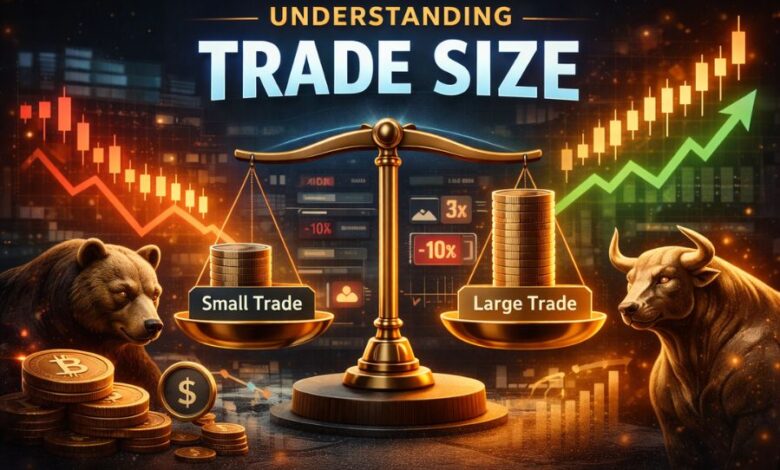
When beginners first start trading cryptocurrency, most of their attention naturally goes to price. They watch charts closely, hoping to buy low and sell high. While price is important, there’s another factor that often plays an even bigger role in shaping trading outcomes—trade size.
Trade size simply refers to how much of your available funds you allocate to a single position. Yet for many new traders, this is something they overlook in the early stages. The focus tends to remain on choosing the right moment to enter or exit the market rather than deciding how much exposure is appropriate.
Many beginners begin exploring position settings by looking at how trading tools are structured here on a crypto derivatives exchange or similar platforms. Seeing how trade size affects margin requirements and potential outcomes can make it easier to understand why even a well-timed trade may behave differently depending on the amount committed.
Why trade size matters from the start
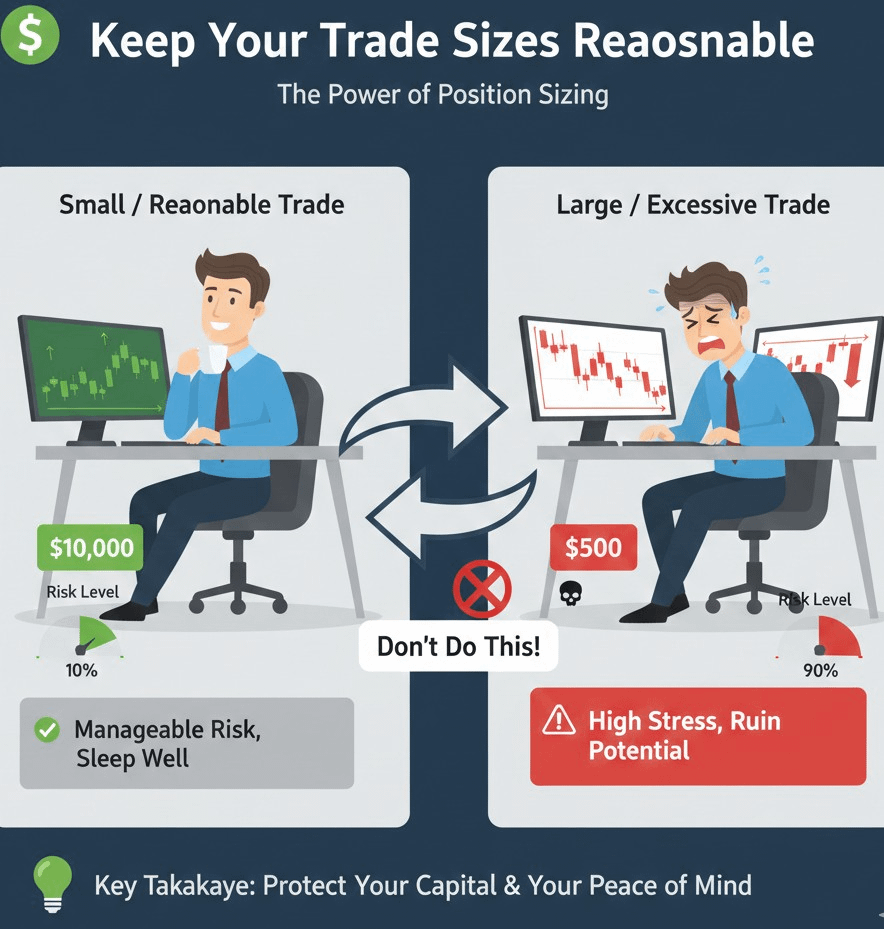
Imagine two traders entering the same position at the same time. One commits a small portion of their available funds, while the other allocates nearly their entire balance.
Even though both traders experience the same market movement, the emotional and financial impact will likely be very different. A small fluctuation may feel manageable for the first trader but stressful for the second. This is because larger positions magnify the effect of every percentage change in price.
Trade size directly affects how sensitive your account becomes to price changes, making it an important factor in overall risk management.
The connection between trade size and risk
Risk in trading is not determined only by market direction—it’s also influenced by how much capital is involved in a trade.
Larger trade sizes can:
- Increase potential gains by amplifying favorable price movement
- Amplify potential losses when markets move in the opposite direction
- Reduce flexibility in decision-making during volatile periods
When too much capital is committed to a single position, even minor price movements can have a noticeable effect on account balance, making it harder to stay calm during normal fluctuations.
Why beginners often choose larger trades
It’s common for beginners to believe that committing more funds will lead to better results. This mindset is often influenced by the idea that bigger trades produce bigger returns in less time.
While this may occasionally lead to larger profits, it also increases the impact of unfavorable market movement. When losses occur, the financial and emotional effects may feel more significant, which can influence future decisions and lead to inconsistent trading behavior.
Understanding that trade size affects both outcomes equally is an important step in building a balanced approach.
Emotional impact of large trade sizes
Large trade sizes can create pressure because a greater portion of the account balance is exposed to market movement. Watching this exposure fluctuate may lead to stress or anxiety, particularly for those who are new to trading.
This emotional response can result in:
- Entering trades too quickly in hopes of recovery
- Closing positions prematurely to avoid further loss
- Hesitating to adjust strategies even when conditions change
Reducing trade size can help maintain perspective and encourage more thoughtful decision-making rather than reactive behavior.
Smaller trades as a learning tool
For beginners, using smaller trade sizes can serve as a practical way to gain experience without excessive pressure.
Smaller positions allow traders to:
- Observe how markets move over time
- Practice entering and exiting trades
- Understand how volatility affects positions
This approach helps create a more forgiving learning environment where mistakes can become valuable lessons instead of significant setbacks.
A simple example
Consider a trader with a $1,000 account balance.
If they allocate:
- $100 to a trade, a 2% loss equals $2
- $500 to a trade, the same loss equals $10
- $1,000 to a trade, the loss equals $20
The market movement is identical in each case, but the financial impact varies based on trade size. This demonstrates how position sizing influences outcomes regardless of market direction.
Why trade size affects long-term progress
Trade size does not just influence individual outcomes—it can also shape how beginners progress over time. When a large portion of an account is used in a single trade, losses may reduce available capital quickly, making it harder to continue practicing or experimenting with different approaches.
For example, if a beginner loses 30% of their balance due to an oversized trade, recovering from that loss may take several successful trades. This recovery process can create pressure to “make up” for earlier mistakes, which sometimes leads to riskier decisions in future trades.
Using smaller trade sizes allows beginners to stay engaged with the market even after experiencing losses. It also creates more opportunities to learn from multiple trades instead of relying on the outcome of one large position.
Flexibility and decision-making
Smaller trade sizes can provide greater flexibility when adjusting positions. Traders may feel more comfortable allowing trades time to develop rather than reacting immediately to short-term changes.
This flexibility supports patience and reduces the likelihood of impulsive decisions. It also allows traders to evaluate market behavior before making adjustments.
How Zoomex supports position management
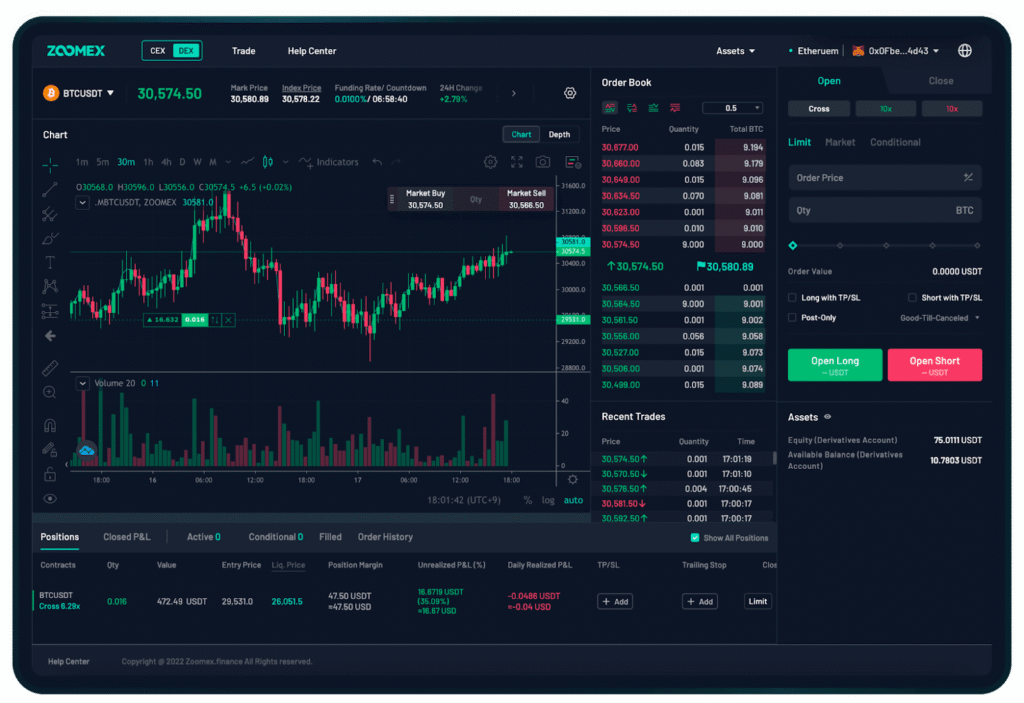
Zoomex trading environments
Zoomex provides access to trading environments where users can adjust trade sizes based on their familiarity with market behavior. The platform allows traders to select position sizes that align with their comfort level and risk tolerance.
For beginners, this flexibility can make it easier to start with smaller trades while observing how positions respond to price changes. Over time, users may refine their approach as they become more familiar with market dynamics.
Building consistency over time
Trade size is often overlooked in favor of timing, but consistency in position sizing can support better long-term decision-making.
Gradually adjusting trade sizes as experience grows allows traders to balance learning with risk awareness. This process helps develop habits that encourage stability and discipline.
Final thoughts
Understanding trade size is an important part of learning how to trade responsibly. While market timing often receives the most attention, the amount of capital committed to each position can influence outcomes just as significantly.
By starting with smaller positions and adjusting exposure gradually, beginners can build familiarity with trading tools and develop more measured decision-making habits.